

There’s a certain peace of mind that comes with knowing your loan repayment is already sorted before your pay even lands, no reminders, no rushing to make a payment. That’s what a standing order form does. It lets your repayment come straight out of your pay each cycle, so you don’t have to think about it again. Get it sorted properly from the start, and your loan runs itself.
Here’s what a standing order form does, why it’s used, and how to set one up.
What’s Inside:
- What Is a Standing Order Form?
- Why Does National Finance Use Salary Deduction?
- How Do You Set Up a Standing Order Form?
- What Happens Once It’s Approved?
- What If You Change Jobs or Pay Cycles?
- Sort Your Standing Order Before You Borrow
What Is a Standing Order Form?
A standing order instructs your bank to transfer your loan repayment to your lender automatically each payday. You set it up once, and the payments continue for the agreed period.
Here’s what that means for you day to day:
- You don’t need to remember payment dates
- No trips to pay in person or transfer funds yourself
- The same amount comes out each cycle, no guesswork
- Far less chance of missing a payment by accident
It is a simple form that removes the need to make a manual repayment each payday. This option is generally available to private-sector customers whose employers do not offer salary deductions. National Finance will confirm which repayment method applies to you.
Why Does National Finance Use Salary Deduction?
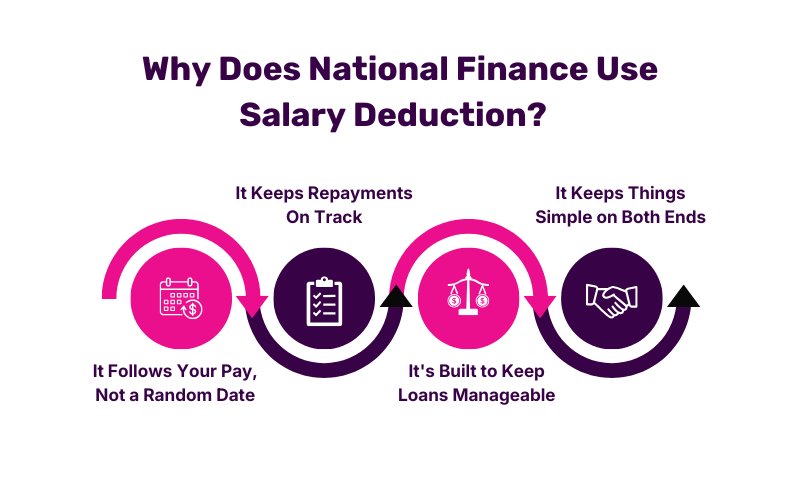
Nearly all National Finance loans are repaid this way instead of through manual payments. It’s not just about convenience, it’s built into how repayments stay consistent for both sides. Here’s why it works this way.
It Follows Your Pay, Not a Random Date
National Finance sets your repayment cycle, weekly, fortnightly, or monthly, to match how you actually get paid. The deduction lands on payday, not on some date that doesn’t line up with your cash flow.
It Keeps Repayments On Track
When the deduction happens automatically through payroll, there’s little room for a payment to slip through the cracks. That keeps things running smoothly for you and reduces the risk of falling behind.
It’s Built to Keep Loans Manageable
The size and length of your loan term are worked out around your day-to-day costs, so there’s still enough left in your pay after each deduction. National Finance checks this closely before approving a loan, whether it’s a personal loan or one taken out to help with school fees, so you’re not left stretched thin.
It Keeps Things Simple on Both Ends
Salary deduction also means less paperwork and fewer phone calls back and forth. Your employer’s payroll office handles the transfer, National Finance receives it on schedule, and you’re free to focus on everything else going on in your pay cycle.
How Do You Set Up a Standing Order Form?
Getting your salary deduction sorted is part of the loan application, nothing extra. The specific form depends on your employer type, private sector or government, but the process itself is simple either way.
What You’ll Need
- Proof you’re currently employed
- Valid ID
- Your employer’s payroll details
- Your pay cycle (weekly, fortnightly, or monthly)
Step by Step
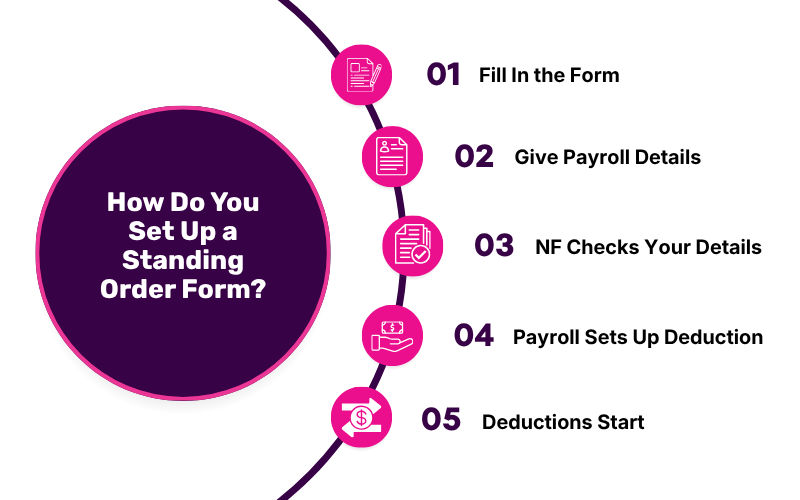
- Fill in the Payment Variation Authority form that matches your employer (private or government).
- Provide your employer and payroll details.
- National Finance checks your employment and pay cycle.
- Your employer’s payroll office sets up the deduction.
- Deductions start automatically from your next pay.
Existing customers in good standing may also have the option of a Bank Standing Order instead, National Finance can advise which option applies to you.
What Happens Once It’s Approved?
Once approved, your repayment becomes a set amount deducted every cycle. The rate and term are fixed from day one, so the figure doesn’t change, and paying early won’t lower what you owe.
There’s nothing extra to manage once it’s set up. Your repayment simply becomes part of your regular pay cycle, the same way tax or other standard deductions might already work.
Checking Your Deduction on Payday
Once your standing order is active, it’s worth glancing at your payslip on the first pay cycle to confirm the deduction has gone through correctly. It should show up as a fixed line item, the same amount, every cycle, for the length of your loan term. If anything looks off, your employer’s payroll office or National Finance can help sort it out quickly, well before it becomes a bigger issue.
What If You Change Jobs or Pay Cycles?
If you switch employers or your pay cycle changes, say from fortnightly to monthly, your standing order needs updating too. This keeps deductions lined up with your actual pay, so nothing gets missed or thrown off.
A few situations that call for an update:
- Starting a new job with a different payroll office
- Moving from weekly to fortnightly pay, or vice versa
- A temporary change in how you’re paid
Let National Finance know as soon as any of these happen. Your form gets reissued and your deductions carry on without a gap.
Sort Your Standing Order Before You Borrow
It’s a small form, but it carries a lot of weight. Once it’s set up, your repayments quietly take care of themselves, matched to your pay, fixed from start to finish, so one less thing sits on your mind each cycle.
If you’re getting ready to apply, the team at National Finance is happy to walk you through the standing order form and set up a repayment plan that fits how you’re paid. Reach out to your nearest branch and have a chat with us, we’re here to help you get it right from the start.