


Before diving into the numbers, let’s talk about something that catches a lot of people by surprise. You budgeted. You planned. You made every personal loan repayment on time, yet somehow, the balance doesn’t seem to be shrinking the way you expected. It’s frustrating, especially when you feel like you’re doing everything right.
The truth is, there’s something quietly working behind the scenes that most people don’t think about until it starts affecting their wallet. It doesn’t make a fuss or demand your attention, but it can have a bigger impact on your loan than you might realise. Understanding it could be the difference between simply getting by and getting ahead.
What’s Inside:
- What is the Interest on a Personal Loan and How Does It Work?
- How Interest Impacts Your Monthly Repayments?
- Factors That Affect the Interest You Pay
- What Happens When You Miss Repayments?
- Practical Ways to Reduce the Interest You Pay
- Take Control of Your Financial Future
What is the Interest on a Personal Loan and How Does It Work?
Interest is the cost of borrowing money. When you take out a personal loan, you repay both the amount you borrowed and the interest charged by the lender.
With National Finance, your loan has a fixed interest rate over a fixed loan term. This means your interest rate stays the same throughout the loan, giving you certainty about what you will repay. Your repayments are calculated at the beginning of the loan, so you know exactly what to expect without worrying about changing interest rates.
Your personal loan repayment amount is based on:
- The amount you borrow
- The fixed interest rate
- The agreed loan term
Because the repayments are fixed, budgeting becomes easier, helping you manage your household expenses with greater confidence.
How Interest Impacts Your Monthly Repayments?
Interest directly affects the amount you repay throughout the life of your loan. Generally, the higher the interest charged, the higher your regular repayments or the greater the total amount you repay over the loan term.
At National Finance, your repayments are designed to be manageable from the outset. Before approving a loan, your repayment term is carefully matched to your income and living expenses, helping ensure you have enough disposable income after meeting your financial commitments.
To make repayments as simple as possible:
- Your repayment schedule is aligned with how you are paid.
- Repayments may be weekly, fortnightly, or monthly, depending on your salary cycle.
- Most repayments are made through salary deductions, helping you stay on track and reducing the risk of missed payments.
This structured approach provides consistency and makes managing your personal loan repayment much easier.
Factors That Affect the Interest You Pay
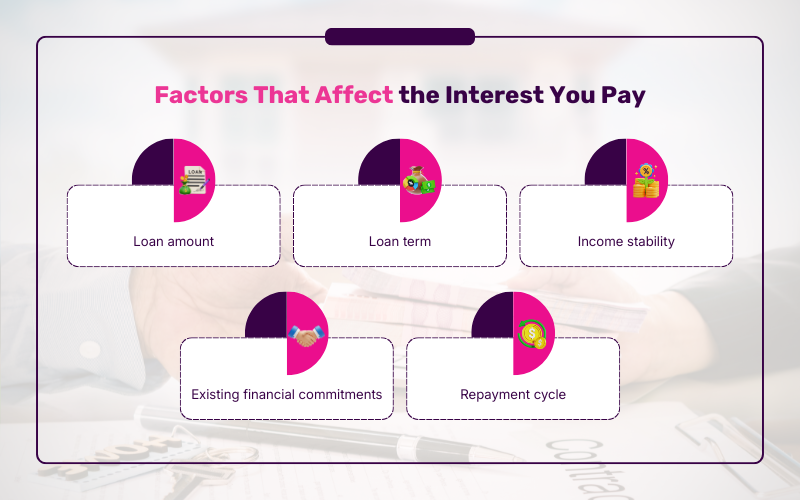
Several factors can influence the total interest you pay on a personal loan. While every lender has its own lending criteria, the main factors usually include your loan amount, loan term, income, repayment capacity and overall financial position.
The most common factors include:
- Loan amount– Borrowing more usually increases the total amount you repay.
- Loan term– The length of the loan affects how repayments are spread out.
- Income stability– Regular employment can help show that you can meet repayments.
- Existing financial commitments– Other loans or deductions may affect how much disposable income you have left.
- Repayment cycle– Your repayment schedule should match how often you are paid.
National Finance predominantly lends to employed individuals, mainly from the government sector. This is because regular salary income and salary-deduction repayments can help support a more reliable repayment process.
Before approving a loan, National Finance applies lending criteria to help ensure customers are not over-leveraged. In other words, the goal is to make sure you still have enough disposable income after taking out the loan.
What Happens When You Miss Repayments?
Missing a repayment can create financial stress and may affect your ability to manage the rest of your loan. It can also make future borrowing more difficult if it shows that you struggled to meet your repayment obligations.
In PNG, many personal loans are repaid through salary deductions. This helps reduce the chance of missed repayments because the repayment is aligned with your pay cycle and deducted consistently.
However, missed repayments can still happen if there are changes to your employment, pay processing, salary deductions, bank details or personal circumstances.
When you miss repayments, it may lead to:
- Your loan is falling behind schedule.
- Additional pressure on your next pay.
- More difficulty managing other living expenses.
- Possible follow-up from your lender.
- A negative impact on your future loan applications.
If you think you may have trouble making a repayment, the best step is to speak with your lender as early as possible. Avoid waiting until the problem becomes bigger. A quick conversation can help clarify your situation and what options may be available.
Practical Ways to Reduce the Interest You Pay
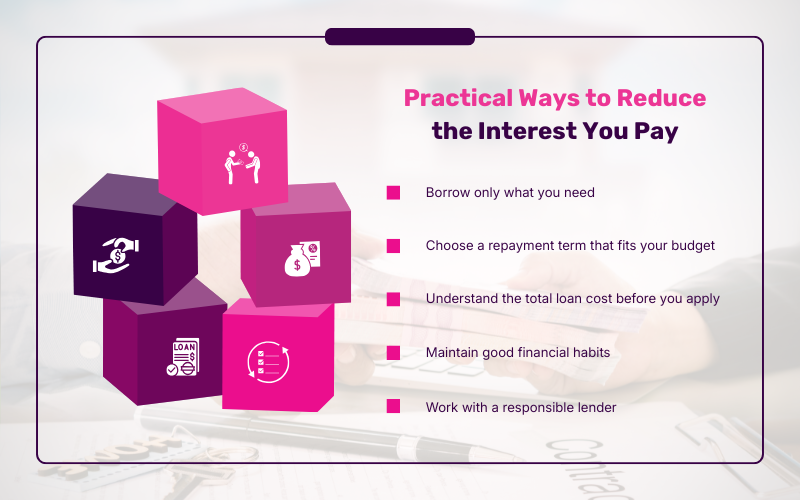
While interest is a normal part of borrowing, there are practical ways to keep the overall cost of your loan lower.
Borrow Only What You Need
Only borrow the amount you actually need. A smaller loan usually means a lower total repayment amount.
Choose a Repayment Term That Fits Your Budget
Your loan should fit comfortably within your household budget. Make sure the repayment amount works with your regular income and living expenses.
Understand the Total Loan Cost Before You Apply
Before accepting a loan, make sure you understand:
- The total amount borrowed.
- The total amount to be repaid.
- The repayment frequency.
- The loan term.
Knowing these details helps you make informed borrowing decisions.
Maintain Good Financial Habits
Simple habits can help you manage your personal loan repayment more effectively:
- Create a household budget.
- Track your regular expenses.
- Avoid unnecessary debt.
- Keep repayments aligned with your pay cycle.
Work with a Responsible Lender
A responsible lender checks your ability to repay before approving a loan. This helps ensure you can meet your obligations while still covering everyday living expenses.
At National Finance, responsible lending practices are designed to help customers borrow within their means and repay with confidence.
Take Control of Your Financial Future
Now that you understand how interest can influence your personal loan repayment, you’re in a better position to make a confident borrowing decision. When you’re ready to take the next step, National Finance is here to help with straightforward loan solutions and a simple application process. Apply today and move closer to your financial goals.