



It’s like planting a seed and watching it grow into something more than you expected. A loan repayment rebate can feel the same way, every repayment you make doesn’t just chip away at your loan, it quietly gives back a little extra. It’s the financial version of tending a garden: watering with discipline, then suddenly noticing there are flowers and fruit. For PNG families, that simple return can spark more meaningful conversations about money, choices, and what it truly means to move forward.
But is this kind of rebate really as sweet as it sounds, or does it come with thorns hidden beneath the blooms? Before you jump in, it’s worth pausing to weigh the pros and cons. Keep reading, because understanding whether a loan repayment rebate suits your family could change the way you think about both your debt and your future.
What’s Inside:
Understanding Loan Repayment Rebates: What They Are and How They Work
When you take out a loan, you agree to pay it back in regular instalments, usually weekly, fortnightly, or monthly, along with interest and any fees. A loan repayment rebate is a financial incentive offered by some lenders that gives you a partial refund or discount on your repayments if you meet certain conditions.
For example, a lender might offer a rebate if you consistently pay on time, or if you make extra repayments above the minimum amount. In some cases, the rebate may come as a direct cash refund, while in others it could reduce the balance you owe, helping you pay off the loan faster.
The main idea is simple. It’s a reward for responsible repayment. Rather than only covering your scheduled instalments, the rebate can make your loan slightly more affordable over time.
For families in Papua New Guinea, where managing day-to-day costs is already a balancing act, understanding how these rebates work is important. You need to know the rules attached to them, how they’re applied, and whether they truly fit your financial situation.
Is a Loan Repayment Rebate Right for You? Pros and Cons for PNG Families
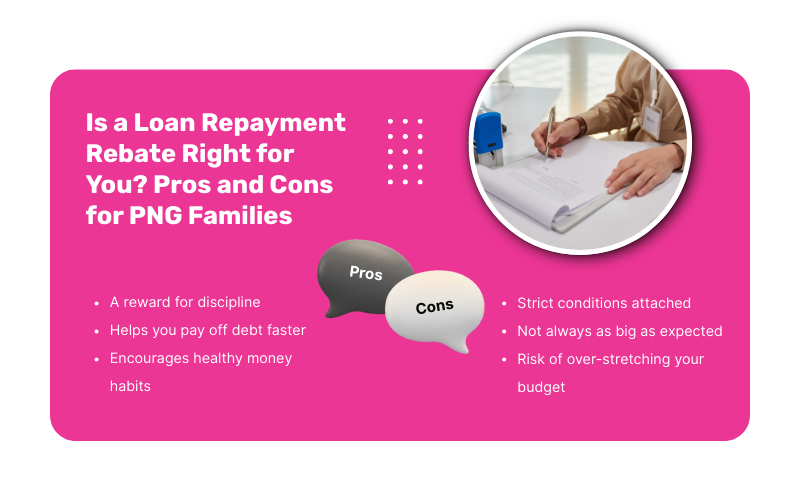
While a loan repayment rebate may sound like an easy win, it’s not always the best fit for everyone. The key is to weigh the benefits against the conditions that come with it and see how it lines up with your family’s financial reality in Papua New Guinea.
The Pros: Why It Could Work in Your Favour
A Reward for Discipline
If you’re someone who always pays on time, a rebate can feel like a bonus for your commitment. Over the life of a loan, this can reduce the overall cost and ease the pressure on your household budget.
Helps You Pay Off Debt Faster
In many cases, rebates are applied to your loan balance. This means you’re cutting down the amount you owe quicker than planned. Over time, this could shorten the loan term and save you money on interest.
Encourages Healthy Money Habits
Knowing that a rebate is waiting if you stick to the rules can motivate you to stay consistent with repayments or even make extra contributions. This discipline can strengthen your overall financial management, not just for one loan but for future goals too.
The Cons: What to Watch Out For
Strict Conditions Attached
Rebates often come with rules. Missing even one repayment, or failing to meet the extra repayment requirement, could mean you lose the benefit. It’s important to understand the fine print before you commit.
Not Always as Big as Expected
While a rebate sounds appealing, the actual amount you save might be modest. If the conditions are tough but the rebate is small, it may not be worth the effort.
Risk of Over-Stretching Your Budget
Sometimes, families push to make extra repayments just to qualify for a rebate. If this puts stress on your day-to-day budget, it can create more problems than it solves.
Finding the Right Balance
For families in Papua New Guinea, a loan repayment rebate can be a helpful financial tool, but only if it matches your situation. If you already have a steady income, are confident in making repayments on time, and like the idea of being rewarded for it, a rebate could work well.
On the other hand, if your income is unpredictable or you’re already stretched thin, chasing a rebate might add unnecessary pressure. The key is to look at the whole picture of your family’s finances, not just the promise of a rebate.
Turn Your Loan into a Path Forward
So, is a loan repayment rebate the right path for your family? That choice is yours, but you don’t have to figure it out alone. At National Finance, we understand the everyday realities, pressures, and dreams of PNG families, which is why we make loan repayments simpler, more flexible, and tailored to you.
With our salary deduction system and a commitment to fair, reliable lending, we help turn financial stress into steady growth. Ready to explore what a rebate could mean for your future? Let’s take that step together.


